×

The Standard e-Paper
Home To Bold Columnists
 The Standard Group Plc is a
multi-media organization with investments in media platforms spanning newspaper
print operations, television, radio broadcasting, digital and online services. The
Standard Group is recognized as a leading multi-media house in Kenya with a key
influence in matters of national and international interest.
The Standard Group Plc is a
multi-media organization with investments in media platforms spanning newspaper
print operations, television, radio broadcasting, digital and online services. The
Standard Group is recognized as a leading multi-media house in Kenya with a key
influence in matters of national and international interest.

Audio By Vocalize
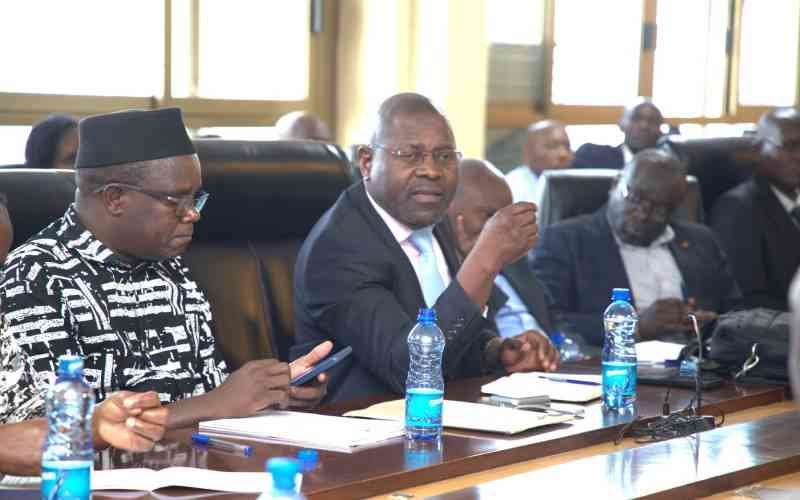
Thousands of students in public universities face a longer wait to resume learning after lecturers rejected the government’s latest salary offer, prolonging a nationwide strike.
The Universities Academic Staff Union (UASU), Kenya Universities Staff Union (KUSU) and Kenya Union of Domestic, Hotels, Educational Institutions, Hospitals and Allied Workers (KUDHEIHA) rejected the government’s proposal for the 2025-2029 collective bargaining agreement (CBA) on Monday, October 12, after negotiations collapsed for the second time in a week.
The dispute follows months of stalled negotiations over the new agreement. The unions and university employers signed a return-to-work formula on November 5, 2025, committing to conclude negotiations within 30 days, but the talks have yet to produce a settlement.
The unions insist lecturers will not return to work until the agreement is negotiated, signed and implemented.
UASU Secretary General Constantine Wasonga blamed the government for the collapse, saying its counterproposal largely repeated an offer presented on October 1 and failed to address the unions’ demands.
“The counter-offer was woefully inadequate and does not provide a credible basis for resolving the dispute and therefore the three unions rejected it in total,” said Wasonga.
He added that the National Treasury, whose participation the unions consider essential to resolving funding questions, had been invited to the meeting but did not attend.
“The strike therefore continues. It is the Government’s position that has led to collapse of the talks,” Wasonga noted, warning that the unions would escalate industrial action until the dispute was resolved.
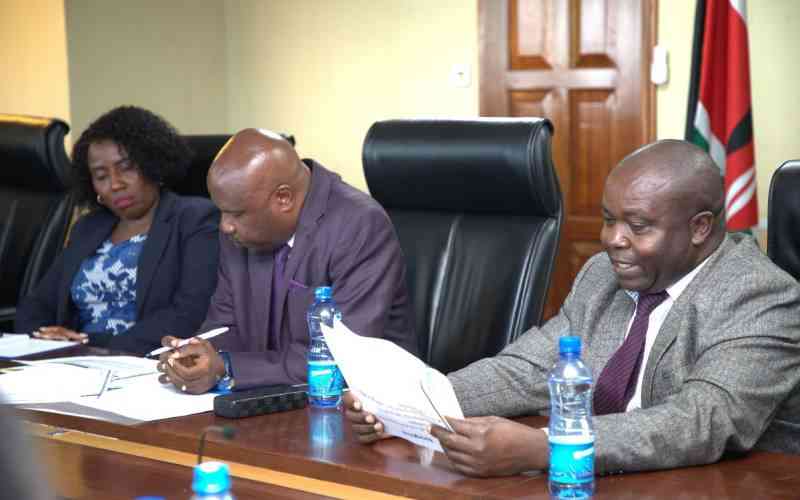
At the centre of the dispute is the proposed Sh9.76 billion allocation for the four-year agreement, which UASU considers inadequate.
Wasonga argued that the amount was comparable to the funding used to implement the previous agreement over a shorter period.
“When we negotiated the 2021-2025 CBA, for two years we consumed Sh9.7 billion, so we cannot imagine a CBA for four years can also consume Sh9.7 billion,” he said.
The unions want salary adjustments that account for inflation, the rising cost of living and the loss of workers’ purchasing power.
They are also seeking commitments on recruiting additional lecturers, staff promotions, harmonising allowances, car loans, mortgages and funding for university staff salaries.
Labour Principal Secretary Shadrack Mwadime, and his Higher Education counterpart Dr Beatrice Inyangala, jointly chaired the meeting said this was a sign of government’s commitment to facilitating dialogue between employers and workers.
“The dispute centres on the negotiation, conclusion, registration and implementation of the CBA, which sets the terms and conditions of employment for unionisable staff in public universities.
Stay informed. Subscribe to our newsletter
Through conciliation, the parties are expected to show goodwill and work towards an amicable resolution that safeguards employees’ interests while taking into account the universities’ operational and financial considerations,” said Mwadime.
He noted that stable industrial relations are essential to uninterrupted university operations and quality higher education.
He further said the outcome will depend on the parties’ willingness to address the outstanding issues in good faith.
“Any agreements reached will be guided by the labour laws governing collective bargaining and the registration of collective agreements. The government reaffirmed its commitment to social dialogue and conciliation, with the aim of achieving sustainable industrial peace in the public university sector,” he said.
UASU Chairperson Grace Nyongesa said the unions had hoped to conclude negotiations last week and allow students to resume learning.
“We are tired of arrears because the value of money when it comes would have eroded,” Nyongesa said, citing delayed payments, pension concerns and problems with remittances that affect workers’ financial security.
KUSU Secretary General Charles Mukhwaya said the proposed salary adjustment of about 3 per cent would not protect workers against inflation and rising living costs.
“We expect the government to come up with a better offer that will cushion the workers against inflation,” Mukhwaya said, urging the government to present specific salary proposals and improve housing and medical allowances.
KUDHEIHA Secretary General Thomas Mboya also rejected the proposed adjustment.
“Telling university workers to take 3 percent to run for four years is an insult, we are not going to take that,” he said.
The continuing strike threatens to disrupt examinations, graduation ceremonies and academic calendars across public universities. Students could face extended semesters or deferred studies, while families continue to meet accommodation, food, transport and upkeep costs despite the interruption of learning.
The impasse persists despite government assurances that a settlement remains possible.
Speaking during World Teachers’ Day celebrations at Kasarani Stadium last week, President William Ruto said the government was engaging lecturers to address their grievances and restore learning.
“We are trying to change things. Even if there are threats to protest, we are looking for where is the problem,” Ruto said.
Education Cabinet Secretary Julius Ogamba said the government had cleared arrears under the 2017-2021 and 2021-2025 CBAs and urged lecturers to obey court orders and resume teaching.
“As we speak today, all arrears under the 2017-2021 and 2021-2025 CBAs have been fully cleared,” Ogamba said, maintaining that the government remained committed to concluding the current agreement.
However, the unions maintain that clearing previous arrears does not resolve their outstanding demands under the 2025-2029 agreement.



Subscribe to our newsletter and stay updated on the latest developments and special offers!






 join
join