×

The Standard e-Paper
Kenya’s Boldest Voice
 The Standard Group Plc is a
multi-media organization with investments in media platforms spanning newspaper
print operations, television, radio broadcasting, digital and online services. The
Standard Group is recognized as a leading multi-media house in Kenya with a key
influence in matters of national and international interest.

Audio By Vocalize
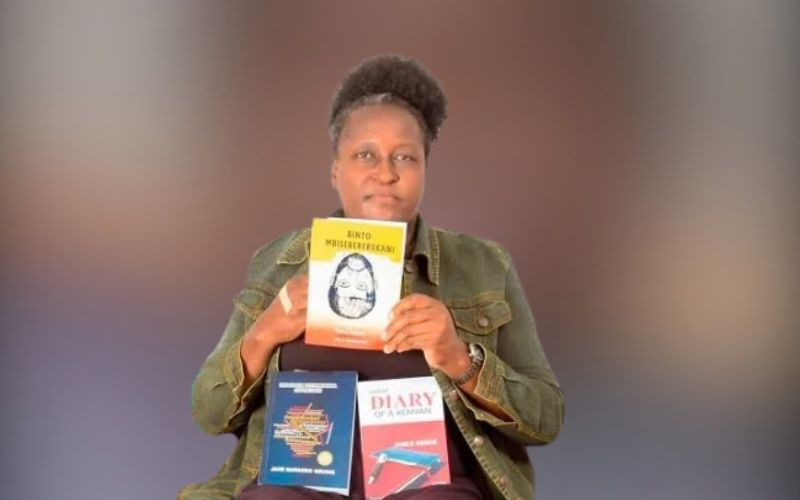
There is a woman I greatly admire, but I have never told her so. She is phenomenal. Her energy is infectious and her determination to do what many of us only talk about is extraordinary. What fascinates me most is that she has chosen to invest her time and energy in something that our society does not always consider worthy of recognition.
Her name is Jane Bosibori Obuchi. You may not know her. She is neither a member of the Wantam nor the Tutam choirs. Yet what she has done for the Ekegusii language and literature makes her a shujaa, a heroine.
If you think she will be decorated with a national honour on Mashujaa Day for this work, however, you may be disappointed. Our national recognition systems do not always seem to notice the people who quietly labour to preserve our cultural heritage.
I sometimes wonder what criteria we use to identify our national heroes. A person can spend years rescuing a language from the margins of public life and still remain largely invisible to the institutions charged with celebrating our national achievements. We must begin to ask such uncomfortable questions. But I am digressing. Let me return to Jane Bosibori Obuchi.
Among her remarkable contributions is the translation of major literary works into Ekegusii. She has translated, among others, Chinua Achebe’s Things Fall Apart as Binto Mbisabererekania and William Shakespeare’s Romeo and Juliet as Romeo na Chuliet. This is no small achievement. She is helping to make literature available to readers in a language that carries their memories and cultural identities.
Translation is sometimes treated as a secondary literary activity, as though the translator merely transfers words from one language to another. Nothing could be further from the truth.
Translation is an act of interpretation and cultural negotiation. The translator must understand not only what the original writer says but also the cultural world from which the words emerge.
A joke, proverb, metaphor or expression may carry meanings that cannot be transferred mechanically into another language. To understand what I mean, look at the opening lines of our national anthem: “O God of all creation” and “Ee Mungu nguvu yetu.” You may think the translator missed the point if you are not well schooled.
In this sense, when Obuchi translates a literary work into Ekegusii, she does more than make a book accessible to a new audience. She demonstrates that Ekegusii can carry complex ideas and the imaginative worlds created by writers from different cultural backgrounds. She expands the expressive possibilities of her language and invites its speakers to encounter literature without abandoning their linguistic identity. In essence, she is at the vanguard of a cultural revolution.
I speak from experience. It took me ten years to compile my English-Maragoli dictionary. Those who imagine that such work is a lucrative enterprise should try their hand at it. The research, verification, documentation and countless hours of intellectual labour demand patience and commitment.
A dictionary is not simply a collection of words. It records how a community names its world and passes knowledge from one generation to another. I did not undertake that work because I expected to become wealthy. I did it because I believe that my language deserves to be documented and made available to future generations.
Obuchi is engaged in a similar labour of love. We are responding to a responsibility that is larger than personal recognition or financial reward.
The Constitution of Kenya provides a powerful basis for this responsibility. Article 7 recognises Kiswahili as the national language, identifies Kiswahili and English as official languages and requires the State to promote and protect the diversity of languages spoken by the people of Kenya. It also requires the State to promote the development and use of indigenous languages.
Yet there is something embarrassing that I want to share with you today. We do not have an officially recognised Kiswahili version of the Constitution of Kenya, 2010! In a country that proudly identifies itself with Kiswahili, how do we explain this omission? To call it shameful is an understatement. It is an abomination. How can our supreme law not be available in that language?
It is easy to blame the government, but we must also ask difficult questions of ourselves. Where are our Kiswahili scholars? What are our departments of Kiswahili in universities doing? Why have we not made the development of our national language an urgent intellectual and civic undertaking? Kiswahili and our other languages will not attain the stature they deserve through declarations alone.
Stay informed. Subscribe to our newsletter
What irritates me is our tendency to wait for donors before we begin doing something about our languages. We often behave as though the survival of our cultural heritage depends on whether an international organisation is willing to finance it.
Ngugi wa Thiong’o spent much of his intellectual life arguing for the importance of African languages and challenging the hierarchies that privilege European languages over indigenous ones. He gave us the script, but we lost it.
Some sceptics will ask who will read books translated into indigenous languages. I find this question unfortunate. It ignores the fact that reading habits are cultivated through access and the availability of relevant material. We cannot declare that readers do not exist before we have made a serious effort to produce books for them.
My engagement with the Constitution has opened up another intellectual adventure. Since I began studying law at Africa Nazarene University, I have found myself reading the Constitution of Kenya, 2010, with a different kind of interest.
I am beginning to appreciate it as a student of law, interested in the language through which rights, responsibilities and the relationship between the citizen and the State are defined.
In the process, I have discovered a new rabbit I am chasing. I have started translating the Constitution into Maragoli. Yes, you heard me right. I have taken on another project, and I intend to pursue it with determination. I hope that when I graduate with my law degree, I will launch the Constitution in the language of my cultural expression.
Do not be mistaken. I am not doing this for money or prestige. I already have both. This is a labour of love. I want speakers of Maragoli to encounter the supreme law of our land in a language through which they understand their world and their place in the Kenyan nation. Translation, in this sense, is not simply about words. It is about the democratisation of knowledge.
I should invite Jane Obuchi to join me in this new adventure. Together, we can demonstrate that our indigenous languages are capable of carrying the most important legal and intellectual texts of our nation. And yes, if we all had half of Obuchi’s energy, Kenya would be much further ahead in developing its languages. Our languages do not need our sympathy but our commitment.
Prof. Egara Kabaji is a writer, educationist and researcher based at Masinde Muliro University. He is also the Vice President of the Pan African Writers Association (PAWA) and the Chancellor of Mount Kigali University, Rwanda.




Subscribe to our newsletter and stay updated on the latest developments and special offers!