×

The Standard e-Paper
Home To Bold Columnists
 The Standard Group Plc is a
multi-media organization with investments in media platforms spanning newspaper
print operations, television, radio broadcasting, digital and online services. The
Standard Group is recognized as a leading multi-media house in Kenya with a key
influence in matters of national and international interest.
The Standard Group Plc is a
multi-media organization with investments in media platforms spanning newspaper
print operations, television, radio broadcasting, digital and online services. The
Standard Group is recognized as a leading multi-media house in Kenya with a key
influence in matters of national and international interest.

Audio By Vocalize
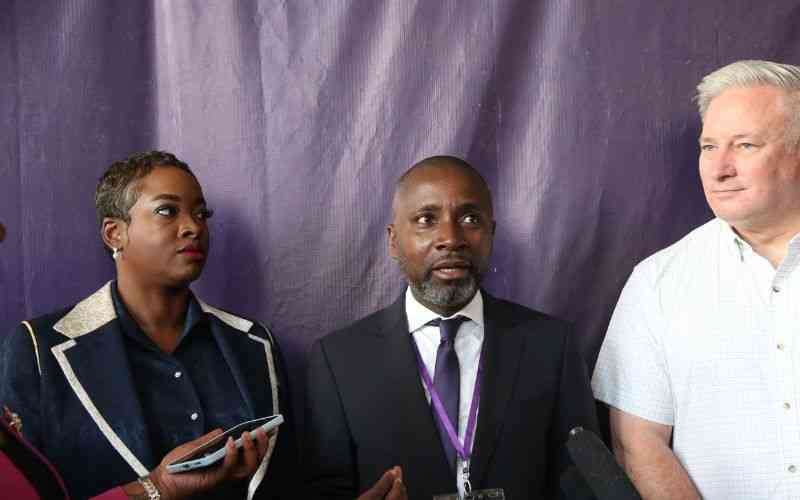
An estimated 269,000 people in Kenya live in modern slavery, according to figures presented at the 2026 Freedom from Slavery Global Forum in Nairobi.
The Global Slavery Index 2023 puts the rate at five in every 1,000 people. Kenya’s National Council on Children’s Services separately estimates that about 17,500 Kenyans are trafficked each year, and roughly half of them are likely to be minors.
Globally, about 50 million people were in modern slavery in 2021, according to the ILO, Walk Free and the IOM.
Bukeni Waruzi of Free the Slaves said the numbers keep rising and that no single actor can tackle the problem alone. He named poverty as the leading driver, along with climate change, migration and the misuse of technology.
He added that East Africa’s role as a migration hub increases exposure to exploitation, and that the global figure is probably an undercount because many victims never appear in statistics.
John Richmond, a former US Ambassador-at-Large on trafficking now at Atlas Free, said trafficking earns criminals around $236 billion a year while carrying little risk of punishment.
He said traffickers are using the Internet and generative AI, but the same tools can help identify offenders, find victims and strengthen investigations. He urged governments to back their rhetoric with real funding and political will.
Kenya joined the Alliance 8.7 Pathfinder Countries in 2024. Artlibert Makori of the Ministry of Labour and Social Protection said the country is working on stronger labour inspection, social protection, responsible business conduct and access to justice.
He said Kenya is also strengthening bilateral labour agreements with destination countries to improve recruitment practices, protect wages and contracts, and guard against trafficking, particularly for people seeking work abroad.
Survivor leadership was a central theme. Shamere McKenzie, co-chair of the forum and CEO of Sun Gate Foundation, said survivors should be recognised as experts, not just invited to tell their stories. She said the forum committed to sharing power and opening doors for survivors to shape policy.
The two-day forum covers responsible supply chains, ethical recruitment, child domestic work, forced marriage, refugee trafficking risks and technology-facilitated trafficking. Participants are expected to adopt Principles for Aligned Action to End Modern Slavery.





Subscribe to our newsletter and stay updated on the latest developments and special offers!







 join
join