×

The Standard e-Paper
Fearless, Trusted News
 The Standard Group Plc is a
multi-media organization with investments in media platforms spanning newspaper
print operations, television, radio broadcasting, digital and online services. The
Standard Group is recognized as a leading multi-media house in Kenya with a key
influence in matters of national and international interest.

Audio By Vocalize
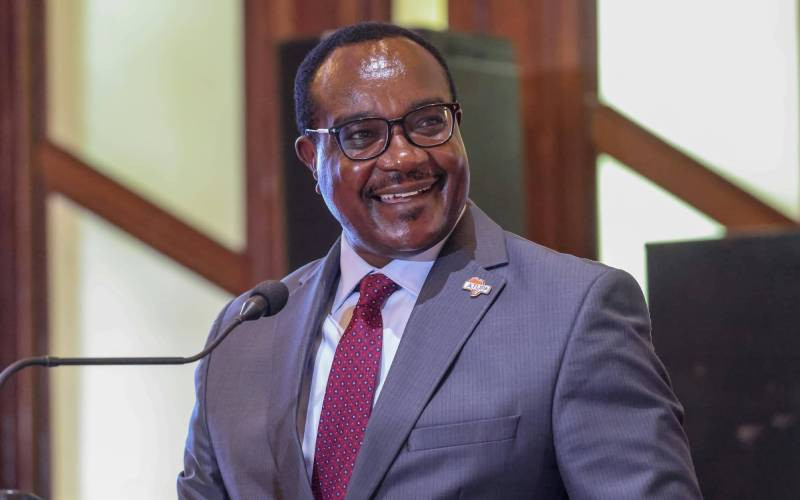
The Government has given a newly appointed multi-stakeholder task team 90 working days to investigate the persistent cases of school unrest, arson and violence and recommend lasting solutions to strengthen safety, discipline and accountability in learning institutions across the country.
The team, whose report is expected by March 2, 2027, has been tasked with moving beyond previous investigations and ensuring that recommendations on school safety are translated into concrete and enforceable reforms.
In its policy direction to the task team, Education Cabinet Secretary Julius Ogamba said school unrest could no longer be treated as isolated disciplinary incidents but required a broader examination of school governance, learner welfare, institutional accountability and the effectiveness of education management systems.
“Education is a fundamental right and a strategic investment in our country's human capital, social cohesion and national development. Our schools must, therefore, remain safe, secure, inclusive and supportive environments in which every learner can realise their full potential,” Ogamba stated.
A key priority will be reviewing safety standards in schools, particularly boarding institutions, where concerns have emerged over dormitory conditions, emergency exits, fire prevention equipment, supervision and evacuation procedures.
The team will also examine school infrastructure, security arrangements, emergency preparedness and disaster risk management to establish whether existing safety regulations are being adequately enforced.
Beyond physical safety, the task team has been instructed to investigate the governance and operational arrangements of boarding schools and recommend reforms to strengthen oversight and institutional accountability.
It will also examine the relationship between school infrastructure, government capitation, household contributions, school fees and the overall cost of education, including the affordability of school uniforms.
On learner welfare, the Government wants a review of existing approaches to discipline, guidance and counselling, mentorship, psychosocial support and grievance-redress mechanisms.
Particular attention will be given to early identification of learner distress, bullying, peer pressure, substance abuse and gender-based violence, with an emphasis on positive discipline, dialogue and meaningful learner participation.
The team will also investigate emerging threats associated with social media, smartphones, misinformation, online mobilisation, criminal gangs and religious extremism, which the Government says require stronger child protection and inter-agency interventions.
It has further been directed to establish clear accountability among school heads, Boards of Management, teachers, parents, sponsors, learners and education officers while identifying weaknesses in existing policies, regulations and legislation governing school safety and discipline.
The assignment comes amid growing concerns over recurrent school fires, destruction of property and violence, some resulting in loss of lives, with more than 687 incidents of unrest reported nationally during the second term of 2026.
He cited the 2024 Hillside Endarasha Academy tragedy and the May 2026 fire at Utumishi Girls Academy as painful reminders of the need to strengthen safety measures and protect learners.
The team has been directed to review previous investigations into school unrest, including the Sagini, Macharia, Wangai and Koech inquiries, establish the implementation status of their recommendations and identify institutions responsible for outstanding interventions.
Stay informed. Subscribe to our newsletter
Ogamba said repeated investigations had generated sufficient evidence on the causes of school unrest, but implementation remained a major weakness.
“Our challenge extends beyond identifying causes. It is fundamentally an implementation, enforcement and accountability challenge,” said Ogamba.
The Government has emphasised that discipline must be strengthened without compromising children's constitutional rights, dignity and best interests, including the protection of learners with special needs and disabilities.
To ensure the recommendations reflect experiences across the country, the team is expected to conduct comprehensive consultations in all 47 counties, involving learners, parents, teachers, school administrators and affected communities.
Its final report must provide a comprehensive assessment of the causes of school unrest, proposals for policy and legislative reforms, and a prioritised and costed implementation framework identifying responsible institutions and timelines.
The Government has also demanded a monitoring and evaluation mechanism with measurable indicators to track implementation beyond the lifespan of the task team.
Every recommendation must have an identifiable institutional owner, resource requirements, a timeline and measurable outcomes, while an inter-agency implementation mechanism is expected to ensure continuity.
The Government acknowledged that school unrest was a multidimensional challenge requiring collaboration beyond the Ministry of Education, particularly with institutions responsible for internal security, health, child protection, social services, digital governance and disaster risk management.
The initiative therefore presents an opportunity to address longstanding weaknesses in school management and establish a sustainable framework that guarantees safe, orderly and accountable learning environments for every Kenyan child.


Subscribe to our newsletter and stay updated on the latest developments and special offers!